


Every time the world feels unstable, and an artist dares answer an interview question, we get the same memo: stay in your lane. Entertain. Distract. Don’t dare analyze what’s happening. Don’t name it. Don’t challenge it. Shut up.
I’m sorry to inform you—I’m not your minstrel on demand. If you’re big mad about that, go sit in the corner and think about why.
Art has always been political. Perhaps your outrage is the real performance. So maybe, you need to quiet and listen.
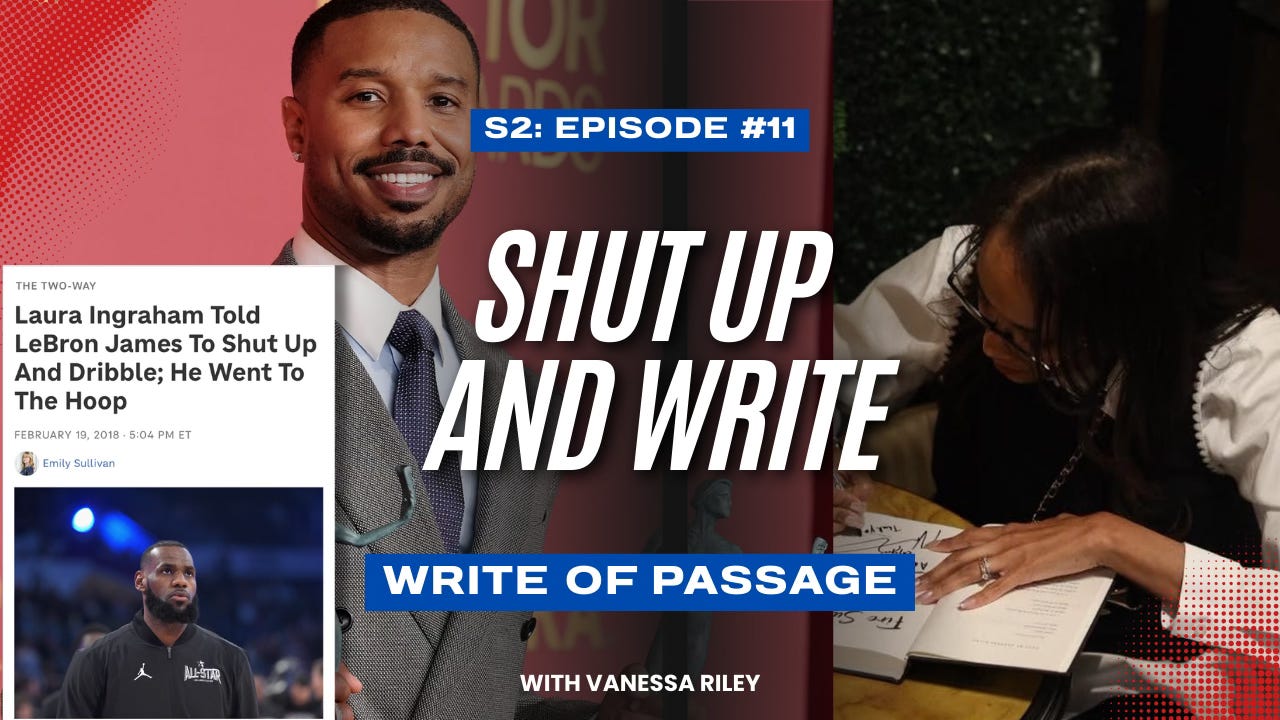
Shut Up and Write
In February 2018, Fox News host Laura Ingraham responded to comments made by NBA superstar LeBron James with a phrase that ricocheted across the culture: “Shut up and dribble.”
She was reacting to an interview James gave alongside Kevin Durant, in which he spoke not only about basketball but about race, leadership, and the lived reality of being a Black man in America. Ingraham dismissed his words as “barely intelligible” and suggested that someone “paid $100 million a year to bounce a ball” should keep his political opinions to himself.
But here’s the thing: the minute you ask a Black person about their experience in America, you are no longer asking about “just sports.” You are asking about history. You are asking about citizenship. You are asking about survival. And you are asking for our truth.
When you tell him or her or them to shut up and dribble, what you are really saying is:
Perform. Entertain. Produce. But do not speak.
That phrasing doesn’t emerge in a vacuum. It echoes a long American tradition—of Black bodies celebrated for talent but silenced in intellect; commodified for labor but dismissed in leadership; applauded for artistry but censored in analysis. From minstrel stages to modern arenas, the script has too often been the same: dazzle us, but do not disrupt us.
And yet, LeBron did not shut up.
He went about his business—on and off the court. He used the moment to amplify conversations about injustice, education, and opportunity. He built schools. He funded scholarships. He made sure that his platform included not just athletic excellence but civic voice. When he was told to shrink, he expanded.
I guess that is what unsettles people. Not that LeBron dribbles—but that he keeps speaking.
So on Threads, Twitter, pretty much all your parasitical streets, I hear authors being told a version of that command:
“Just shut up and write.”
Don’t talk politics.
Don’t analyze power.
Don’t interrogate policy.
Stick to romance.
Stick to fiction.
Tell us about dukes and wagers and stolen glances, but do not dare connect the past to the present. In my June release, A Deal at Dawn, some readers are dying to know if the Duke of Torrance survives a chronic illness Black communities still suffer from today, but many more want to hear about the hurt-comfort caregiving in his bathtub or his foot fetish.

In Fire Sword and Sea, some want to hear about the hijinks of women cross-dressing as men but forget about the systems of government that oppress them and force them into piracy as their way to survive.
And since I’ve been writing to you weekly, I’ve gotten those nasty little emails telling me that I should stick to writing historical fiction and leave politics alone.
To those folks, what the heck do you think I have been writing all along?
When I describe women rising up in hostile systems, about enslavement and trafficking, about corrupt leaders, white supremacy, about diseases neglected because they ravage Brown bodies—I am writing politics. I’m writing about policy. I am writing about power. Corsets and cravats and crowns never dilute the truth.
You cannot celebrate the art and forbid analysis.
You cannot applaud the talent and mute the testimony.
You cannot consume the culture and silence the creator.
The expectation that artists remain apolitical is itself political.
It says:
We want your labor, LeBron, not your leadership, Jasmine
Your imagination, Micheal B, not your insight—Delroy
You are for entertainment, forget the lived experiences that got you here.
But identity is not something I can toggle off between chapters. When you ask me about my work, you are asking about my worldview. When you ask about my characters, you are asking about justice and injustice as much as you reading for love.
And love is power, and it is always political.
We are living in times that feel combustible. Many are waking up to realities they once refused to see.
They don’t know who to trust. They want words of comfort. But where are you going to get that? You told me to shut up and write.
Writers, creators—moments like this, it’s easier to retreat—to binge-watch comfort shows, to lose ourselves in manuscripts, to hide in deadlines and drafts. I, too, would love to stay in my rom-com era. I would love to focus solely on shenanigans and happily-ever-afters. But even I can only binge-watch MythBusters, hockey, and Bridgerton for so long.
So no, I cannot just shut up and write.
I must write. Writing is my blood laid bare on the page. I will not go quietly into the night.
To my fellow writers, artists, thinkers—especially those who are tired, furious, heartsick:
Don’t shut up.
Do keep writing.
Write your joy.
Write your grief.
Write your analysis.
Write your satire.
Write your fury.
Take your rage and forge it into paragraphs that burn the soul of the nation clean. Take your voice and worldview and shape it into essays that clarify righteousness, that take it from the hands of the deceiver. Take your heartbreak and craft stories that remind us what humanity is supposed to be.
Art is our last defense. So players play. Actors act. Legislators legislate. Activists be active.
But writers? Remember. Record. Reimagine. Write.
So speak.
Write.
Create.
Refuse to politely disappear.


This week’s booklist feature Women writers, sheroes:
Sister Outsider — Audre Lorde
“The master’s tools will never dismantle the master’s house.” Essays on identity, silence, anger, and the political necessity of speaking.
Art on My Mind — bell hooks
Directly interrogates the idea that Black artists should be apolitical. She dismantles it completely.
Assata — Assata Shakur
Memoir as testimony. Voice as resistance.
The Love Songs of W.E.B. Du Bois — Honorée Fanonne Jeffers: A sweeping, multigenerational novel that braids Black love, scholarship, and history affirming—there is no separating the personal from the political.
Fire Sword and Sea — Vanessa Riley: A sweeping historical novel that exposes pirates, sisterhood, and survival in the chaotic and diverse 17th-century (1600s) Caribbean.

This week I’m highlighting Loyalty Bookstore.
Consider purchasing Fire Sword and Sea from Loyalty Bookstore or from one of my partners in the fight, bookstores large and small, who are hanging with me.
Come on, my readers, my beautiful listeners. Let’s keep everyone excited about Fire Sword and Sea.
You can find my notes on Substack or on my website, VanessaRiley.com, under the podcast link in the About tab.
Let’s keep rising and creating together. Please like, subscribe, and share the podcast. And stay connected to Write of Passage.
Thank you for listening. I want you to come again. This is Vanessa Riley.
Upcoming Events for Vanessa Riley
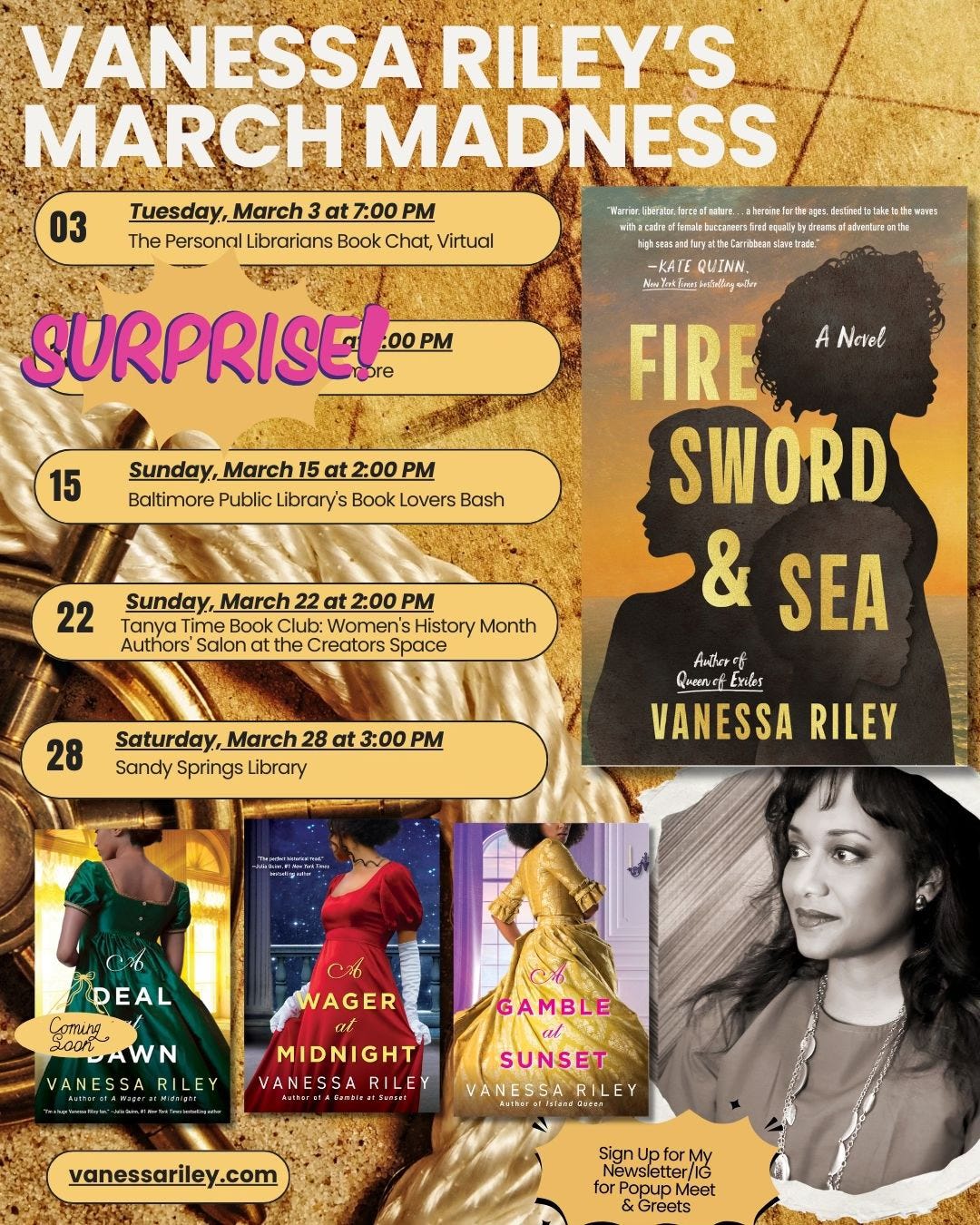
Virtual FB chat on Fire Sword and Sea with the Personal Librarians.
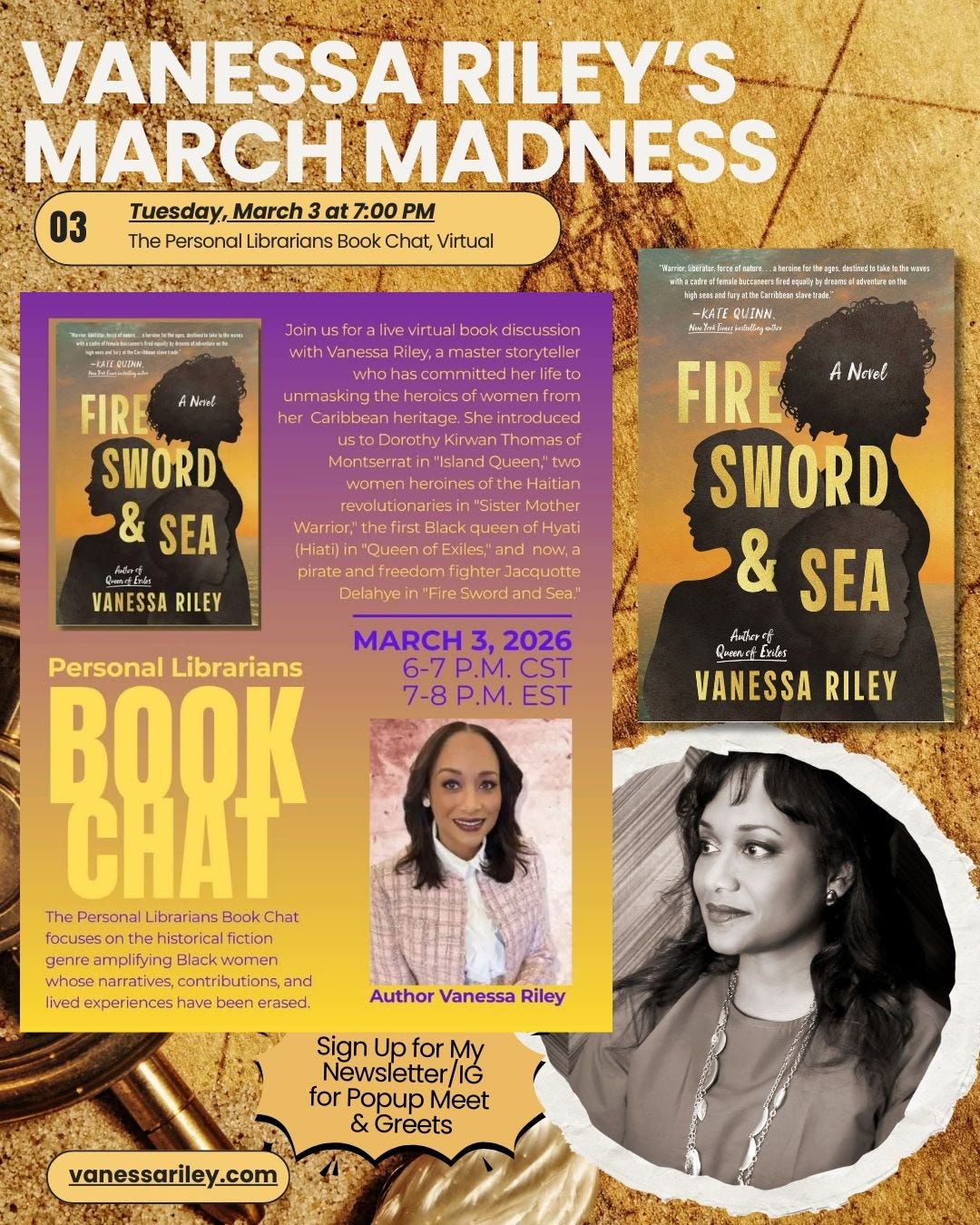
Book Lovers at Baltimore Library

Herstory Author Salon: Tanya Time Book Club with host Tanya Sams featuring Sadeqa Johnson, Reshonda Tate, and Vanessa Riley. - March 22


